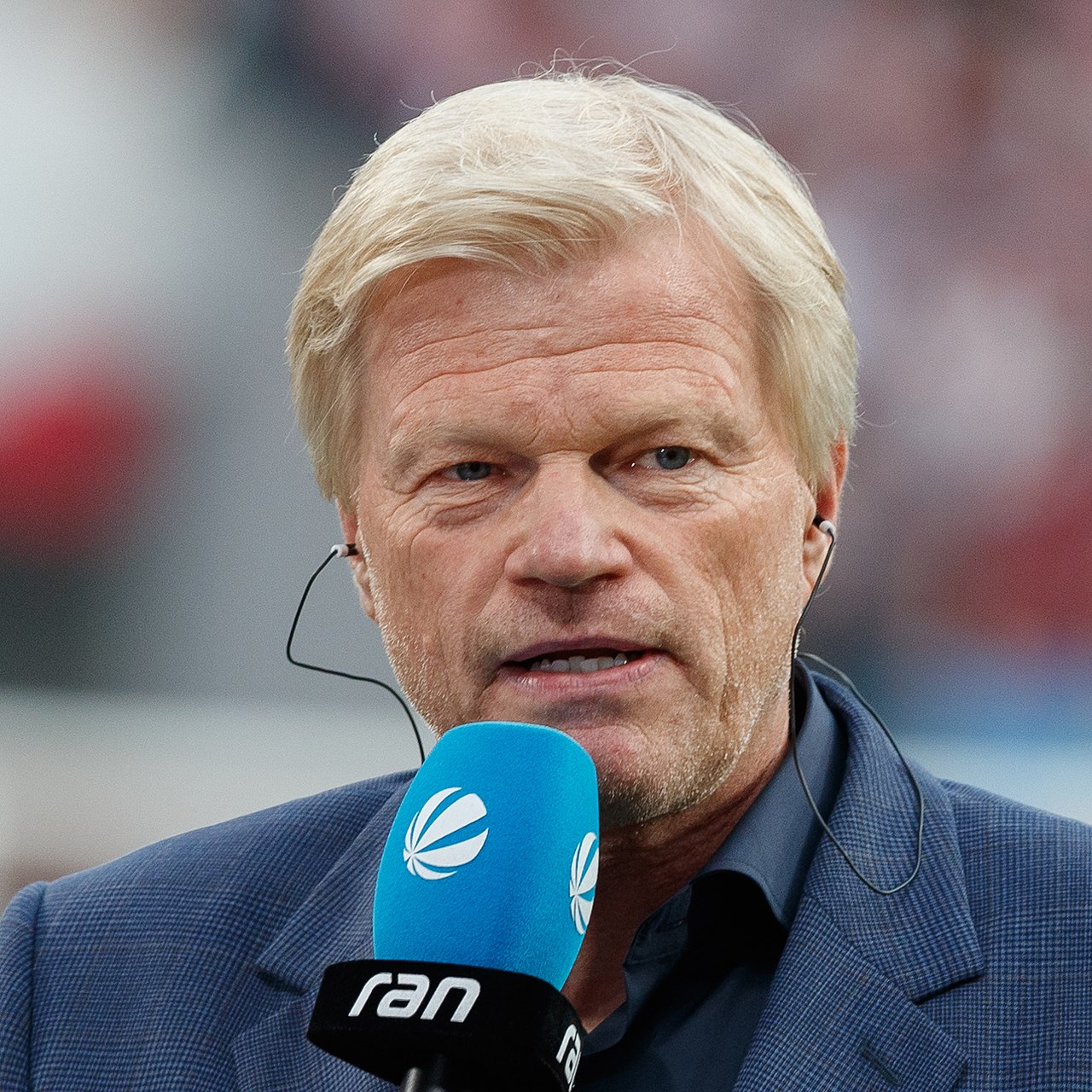
Oliver Kahn's Audacious Messi Challenge to Leroy Sané Revealed on Fußballtalk
In the high-stakes world of elite football, where immense talent often collides with the pressures of performance and expectation, few figures command attention quite like Oliver Kahn. The legendary Bayern Munich goalkeeper, known for his ferocious will to win and unparalleled mentality on the pitch, brought his distinctive leadership style to the boardroom as the club's CEO. It was during a compelling appearance on Sky's "Triple - der Hagedorn Fußballtalk" that Kahn dropped a bombshell revelation, unveiling the extraordinary lengths he went to motivate one of Bayern's most talented, yet sometimes inconsistent, stars: Leroy Sané.
The footballing world often debates the interplay of raw talent and mental fortitude. Kahn, a man who embodied the latter, shared a direct and incredibly bold challenge he once issued to Sané. "With Leroy, we always had this issue," Kahn confessed on the popular inside Oliver Kahn's creative Sané motivation on Fußballtalk. "I told him, 'If I had your talent, I'd be Messi'." This audacious comparison to arguably the greatest footballer of all time wasn't merely a casual remark; it was a carefully calculated motivational gambit, designed to ignite a fire within a player whose potential was undeniable, but whose consistency often wavered.
The Genesis of the "Messi Challenge": Kahn's Insight on Sané's Potential
The context surrounding Kahn's challenging words to Leroy Sané is crucial. During his tenure at Bayern Munich, Sané, a winger of blistering pace, mesmerising dribbling ability, and a powerful shot, was frequently a subject of intense scrutiny. While flashes of his brilliance were undeniable – moments where he effortlessly bypassed defenders or unleashed unstoppable shots – critics often pointed to perceived inconsistencies in his performance, body language, and overall mentality. It was this perceived gap between his prodigious talent and his sometimes-unfulfilled potential that Kahn, as CEO, sought to bridge.
Kahn, recalling the exchange on "Triple - der Hagedorn Fußballtalk," painted a vivid picture. Sané's reaction to the direct comparison with Lionel Messi was one of genuine surprise. "He just looked at me with big eyes. He didn't really know what to say. So I told him, just go out and show it," Kahn explained. This wasn't about belittling Sané; it was about confronting him with the immense expectations that come with his level of talent, urging him to convert that raw ability into consistent, world-class performances. Kahn understood that simply telling a player to "try harder" often falls flat. Instead, he chose a provocative, almost confrontational, method to shake Sané out of any complacency and truly internalise the extent of his own capabilities.
Kahn's approach highlights a fundamental aspect of high-performance leadership: the ability to diagnose not just physical or tactical issues, but also the psychological barriers holding a player back. His statement wasn't just praise; it was a mirror, reflecting Sané's own untapped greatness back at him, coupled with a demand for action. For more on this, read Kahn Explains Sané's Untapped Potential: "You Could Be Messi".
Decoding Kahn's Leadership Philosophy: Beyond the Roar
Oliver Kahn's career as a player was defined by an almost terrifying intensity, a relentless pursuit of perfection, and a psychological dominance that earned him the nickname "Der Titan." It's no surprise that this fierce mentality extended into his role as a football executive. His "Messi challenge" to Sané offers a fascinating glimpse into his leadership philosophy, which seems to blend profound psychological insight with a willingness to employ unconventional motivational tactics.
Kahn's message was multi-layered. Firstly, it was an undeniable compliment, acknowledging Sané's extraordinary innate abilities. To be told you possess the talent to be "Messi" is the highest praise any attacking player could receive. However, it came with a significant caveat: the implication that Sané was not yet reaching that potential due to something within his control – his mentality. This subtle distinction moves beyond simple encouragement to a more profound challenge of character and self-belief.
The Psychological Impact of a Direct Comparison
Psychologically, comparing a player to Messi can be a double-edged sword. For some, it might be overwhelming, creating undue pressure. For others, particularly those with strong intrinsic motivation, it can serve as a powerful catalyst. Kahn, having operated at the very pinnacle of professional sport, likely understood Sané's personality well enough to gauge that this bold statement would resonate and challenge him, rather than crush him. It suggests a belief in Sané's underlying mental strength, despite the outward appearances of inconsistency.
Kahn's approach contrasts with more traditional motivational speeches. Instead of generic words of encouragement, he offered a specific, almost provocative vision of Sané's ultimate potential. It wasn't about external factors; it was entirely about Sané's internal drive and choices. This kind of challenge, delivered by a figure as imposing and respected as Kahn, is designed to linger, prompting introspection and a desire to prove the assertion true.
Kahn's own career was a testament to the power of mentality. He wasn't always the most naturally gifted keeper, but his unparalleled work ethic, fierce concentration, and unwavering self-belief elevated him to the pantheon of footballing legends. It is from this deeply personal understanding of what it takes to reach the top that he likely drew the conviction to make such a profound statement to Sané. His method underscores a belief that talent is merely the foundation; it is mentality that builds the skyscraper of consistent, elite performance.
The Messi Standard: Talent vs. Mentality in Elite Football
Lionel Messi is not merely a player of immense talent; he is a paradigm of consistent excellence. His longevity at the absolute peak of world football is a testament to a unique blend of generational skill, tactical intelligence, and an underlying mental resilience that often goes unremarked amidst the awe of his dazzling individual moments. Kahn's challenge to Sané implicitly highlights this "Messi Standard" – where extraordinary talent is seamlessly coupled with an unwavering, high-performance mentality.
What Defines "Messi Level" Mentality?
- Unwavering Consistency: Messi rarely has an "off" game, even when not scoring. His influence on play is almost constant.
- Relentless Pursuit of Excellence: Despite winning countless accolades, he consistently seeks to improve and maintain his peak.
- Adaptability and Evolution: Messi has adapted his game over the years, from a raw winger to a false nine, to a deep-lying playmaker, always finding new ways to dominate.
- Resilience Under Pressure: Performing at the highest level in crucial moments, game after game, season after season.
- Body Language & Focus: Even when things aren't going his way, Messi's focus often remains internal and determined, rarely showing outward frustration that impacts his play.
In contrast, players like Sané, despite possessing arguably comparable raw attributes in specific areas (e.g., pace, dribbling), have sometimes struggled to maintain that consistent mental edge. The difference often lies not in the ability to produce a moment of genius, but in the capacity to do so repeatedly, under immense pressure, and to sustain an elite performance level over an entire season and career. This requires self-discipline, a deep understanding of one's game, and an unshakeable belief in one's ability to overcome setbacks.
Cultivating a Winning Mentality: Practical Tips for Athletes (and Beyond)
- Self-Awareness: Understand your strengths and weaknesses, both technical and mental. Identify triggers for inconsistency.
- Set Clear Goals: Beyond winning trophies, set process-oriented goals related to consistency, effort, and attitude.
- Embrace Constructive Criticism: View feedback, even harsh, as an opportunity for growth, not personal attack.
- Develop Routine & Discipline: Consistent preparation, recovery, and lifestyle choices contribute to mental stability.
- Visualize Success: Regularly imagine performing at your peak, maintaining positive body language, and overcoming challenges.
- Focus on the Present: Avoid dwelling on past mistakes or future pressures; concentrate on the current moment and task.
- Seek Mentorship: Engage with experienced individuals who can offer guidance and challenge your perspectives, much like Kahn did for Sané.
Sané's journey at Bayern, marked by 223 appearances, 61 goals, and 55 assists, certainly produced impressive statistics. Yet, the persistent narrative surrounding him was a quest for that elusive "Messi-like" consistency. His subsequent departure on a free transfer to Galatasaray last summer, at the age of 30, perhaps underscores that the mental aspect of his game, and the ability to unlock his absolute maximum potential consistently, remained a work in progress even after Kahn's bold challenge. The question remains whether that audacious comparison sparked a long-term shift in his approach.
Lessons from the Kahn-Sané Dynamic for Leaders and Athletes
The interaction between Oliver Kahn and Leroy Sané, revealed on "Triple - der Hagedorn Fußballtalk," offers invaluable insights for anyone in a leadership position, as well as for athletes striving for peak performance. It transcends the specifics of football, touching upon universal themes of motivation, potential, and the human psyche.
For Leaders and Managers:
- Know Your People: Kahn's challenge was specific and tailored. Effective leaders understand the individual psychology of their team members and adapt their motivational strategies accordingly. What works for one might not work for another.
- Dare to Be Bold: Sometimes, conventional encouragement isn't enough. Leaders must have the courage to deliver uncomfortable truths or audacious challenges if they believe it will unlock greater potential.
- Focus on Inner Game: Beyond technical skills, great leaders address the mental and emotional components that drive performance. They help individuals cultivate resilience, self-belief, and consistency.
- Balance Praise and Push: Kahn's statement was a high compliment wrapped in a powerful demand. This balance ensures that employees feel valued for their talent while being challenged to grow.
- Articulate the Vision of Potential: By comparing Sané to Messi, Kahn articulated a grand vision of what Sané could truly become. Leaders should paint a clear picture of high-level success for their teams.
For Athletes and Individuals:
- Embrace the Challenge: When a respected figure sees more in you than you're currently demonstrating, it's an opportunity, not a burden. Use such challenges as fuel for improvement.
- Self-Reflect Constantly: Honestly assess your own consistency, effort, and body language. Are you truly maximising your talent every single day?
- Cultivate a Growth Mindset: View setbacks and criticism not as failures, but as data points for learning and development. The path to greatness is paved with continuous improvement.
- Define Your Own "Messi Standard": While direct comparisons can be motivating, ultimately, success comes from defining and striving for your personal peak performance, regardless of others.
- Understand Talent Isn't Enough: Raw ability opens doors, but dedication, hard work, and an unshakeable mentality are what keep you in the room and help you excel over the long term.
Oliver Kahn's "Messi Challenge" to Leroy Sané remains a fascinating case study in elite sports psychology and leadership. It highlights the eternal quest to bridge the gap between innate talent and consistent, world-class performance. Whether Sané ultimately reached the "Messi level" in his career is debatable, but the anecdote from oliver kahn fußballtalk serves as a powerful reminder that in the relentless pursuit of greatness, the mind can be as potent a tool as any physical attribute.